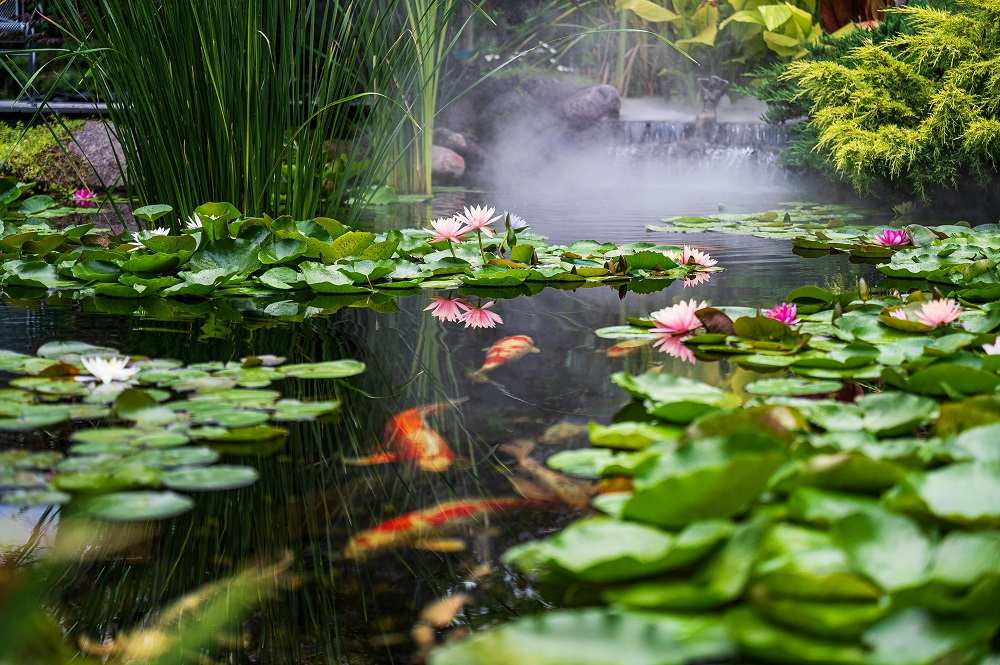
Why Koi Health and Water Clarity Are Directly Connected
Relationship between Water Quality and Koi Longevity
Water quality has a direct impact on how long koi live and how well they thrive. Koi can live for decades when kept in stable, clean water with balanced chemistry. Poor water quality, even at low levels over time, places constant stress on their bodies. Elevated ammonia or nitrite levels damage gills, interfere with oxygen absorption, and weaken immune systems.
How Poor Circulation and Filtration Stress Fish
Inadequate circulation creates dead zones where waste settles and oxygen levels drop. These stagnant areas quickly become breeding grounds for harmful bacteria and algae. When koi are forced to live in poorly circulated water, they experience ongoing stress that affects feeding behavior, growth, and overall health.
Common Problems Caused by DIY or Undersized Systems
Many DIY ponds struggle because filtration and pumps are selected based on budget rather than pond demands. Filters are often too small for the fish load, and pumps may not move enough water to support healthy biological processes. These limitations lead to cloudy water, excessive algae growth, foul odors, and frequent water quality swings.
Why Clear Water Does Not Always Mean Healthy Water
Clear water can be misleading. A pond may look clean while still containing harmful levels of ammonia, nitrites, or low oxygen. These invisible problems are often the reason koi become lethargic, stop eating, or develop health issues despite the pond’s appearance.
Proper Pond Design Starts With Fish Health in Mind
Correct Pond Depth for Koi Safety and Temperature Stability
Depth is one of the most important design factors for koi ponds. Shallow ponds are more vulnerable to rapid temperature changes, predators, and poor water quality. Professional contractors typically recommend deeper ponds to provide koi with thermal stability and safe retreat zones.
Rounded Shapes and Smooth Transitions to Prevent Injury
Sharp corners, steep drop-offs, and abrupt ledges can cause koi to injure themselves, especially during feeding or spawning. Professionals avoid these hazards by designing ponds with rounded shapes and smooth depth transitions.
Strategic Placement to Reduce Debris, Overheating, and Runoff
Where a pond is placed is just as important as how it is built. Professional contractors carefully evaluate sun exposure, nearby trees, slope, and drainage patterns before construction begins. Poor placement can lead to excessive leaf debris, overheating, and contaminated runoff entering the pond.
Balancing Pond Size with Koi Population Limits
Overcrowding is a common mistake that leads to poor water quality and stressed fish. Professional koi pond contractors design ponds with realistic fish population limits in mind, ensuring there is enough water volume to support healthy growth.
Advanced Filtration Systems Used by Professional Contractors
Mechanical Filtration for Debris and Waste Removal
Mechanical filtration is the first line of defense in a healthy koi pond. It captures solid waste such as fish waste, uneaten food, leaves, and organic debris before they break down and contaminate the water. Professional contractors use high-capacity mechanical filters that can handle heavy koi loads without clogging or slowing water flow.
Biological Filtration for Ammonia and Nitrite Control
Biological filtration is what truly keeps koi healthy. Beneficial bacteria colonize specialized filter media and convert toxic ammonia from fish waste into nitrites, and then into less harmful nitrates. Without strong biological filtration, even clear-looking water can become dangerous for koi.
Importance of Correctly Sized Filter Systems
Filter size matters just as much as filter type. Undersized systems quickly become overwhelmed, leading to cloudy water and unstable water chemistry. Oversized systems, on the other hand, can disrupt beneficial bacteria or create excessive flow that stresses fish.
How Professionals Prevent Over-Filtering and Under-Filtering
Achieving the right balance is key. Over-filtering can strip water too aggressively; disrupting biological stability, while under-filtering allows waste to accumulate faster than it can be processed. Professionals avoid these extremes by pairing mechanical and biological filtration correctly and controlling flow rates.
Water Circulation and Oxygenation Techniques
Proper Pump Sizing for Koi Ponds
Pump sizing is one of the most important technical decisions in koi pond construction. A pump that is too weak fails to move water effectively, while an oversized pump can create excessive currents that stress fish and disrupt biological filtration.
Waterfall and Stream Placement for Oxygen Exchange
Waterfalls and streams do more than enhance visual appeal they play a critical role in oxygen exchange. As water moves and breaks across rocks and surfaces, it absorbs oxygen from the air, increasing dissolved oxygen levels throughout the pond.
Eliminating Dead Zones and Stagnant Areas
Dead zones are areas of the pond where water movement is minimal. These zones allow waste to accumulate, oxygen levels to drop, and harmful bacteria to develop. Over time, stagnant areas become a major source of poor water quality and fish stress.
How Circulation Supports Both Clarity and Fish Health
Effective circulation ties the entire pond system together. Moving water delivers oxygen to beneficial bacteria, helps filtration systems work efficiently, and prevents organic waste from breaking down in the pond. For koi, consistent circulation means stable oxygen levels, reduced stress, and healthier behavior.
Managing Waste, Debris, and Algae the Right Way
Bottom Drains and Skimmers for Continuous Waste Removal
Bottom drains and skimmers are essential tools for managing waste in koi ponds. Bottom drains remove heavier debris such as fish waste and uneaten food before it can break down and release harmful toxins. Skimmers capture floating debris like leaves, pollen, and surface oils before they sink.
Leaf Control Strategies and Seasonal Debris Management
Leaves and organic debris are major contributors to poor water quality, especially during seasonal changes. As debris decomposes, it increases nutrient levels that feed algae and strain filtration systems.
Natural Algae Control vs. Chemical Dependence
Algae is a natural part of any pond ecosystem, but excessive growth is usually a sign of imbalance. DIY solutions often rely on chemical treatments that offer short-term clarity while disrupting beneficial bacteria and stressing fish.
Role of Beneficial Bacteria in Water Clarity
Beneficial bacteria are the foundation of clear, healthy pond water. These microorganisms break down organic waste, convert harmful compounds into safer forms, and compete with algae for nutrients.
Fish-Safe Water Treatments and Testing Protocols
Routine Water Testing for pH, Ammonia, Nitrites, and Nitrates
Consistent water testing is the foundation of koi health management. Professionals regularly test key parameters such as pH, ammonia, nitrites, and nitrates to understand how well the pond’s biological system is functioning.
Safe Water Conditioners and Dechlorination Methods
Tap water often contains chlorine or chloramines that are harmful to koi and beneficial bacteria. Professional contractors use fish-safe water conditioners to neutralize these chemicals during water changes or top-offs.
Avoiding Harmful Overuse of Additives
One of the most common mistakes in pond care is the overuse of additives. Excessive treatments, even those labeled as “safe,” can destabilize water chemistry and harm beneficial bacteria.
Adjusting Water Chemistry Gradually to Reduce Fish Stress
Koi are highly sensitive to sudden changes in water conditions. Rapid shifts in pH, temperature, or mineral content can cause shock, weaken immune systems, and lead to illness.
Seasonal Pond Care That Protects Koi Year-Round
Spring Cleanouts and System Restarts
Spring is a critical transition period for koi ponds. As water temperatures rise, debris accumulated over winter begins to break down, increasing the risk of ammonia spikes. Professional contractors perform thorough spring cleanouts to remove organic buildup from the pond bottom, skimmers, and filters.
Summer Oxygen Management and Temperature Control
Summer brings higher temperatures and increased biological activity. Warm water holds less oxygen, which can stress koi especially in heavily stocked ponds. Professionals address this by optimizing aeration, circulation, and waterfall flow to maintain healthy oxygen levels.
Fall Debris Prevention and Feeding Adjustments
Fall introduces heavy leaf drop and fluctuating temperatures. If not managed properly, decomposing leaves can quickly degrade water quality. Professional contractors implement debris prevention strategies such as netting, skimmer optimization, and adjusted circulation patterns to keep organic material out of the pond.
Winter Preparation to Prevent Fish Loss
Winter preparation is essential for protecting koi in colder climates. Professional contractors prepare ponds by removing excess debris, ensuring proper water depth, and maintaining openings in ice to allow gas exchange.
Feeding Practices Professionals Recommend for Healthy Koi
Matching Food Type to Water Temperature
Koi digestion is closely tied to water temperature. In warmer water, koi can efficiently process higher-protein foods that support growth and color development. As temperatures drop, their metabolism slows, and high-protein diets become harder to digest.
Avoiding Overfeeding and Waste Buildup
Overfeeding is one of the fastest ways to degrade water quality. Uneaten food sinks to the bottom of the pond, where it decomposes and releases ammonia. Even food that is eaten contributes to increased waste when koi are fed more than they can process.
Seasonal Feeding Schedules
Koi feeding schedules change with the seasons. During warm months, koi may be fed multiple times a day in small portions. As temperatures cool, feeding frequency is reduced, and feeding may stop altogether once water temperatures drop below safe digestion levels.
How Improper Feeding Impacts Water Clarity
Improper feeding practices almost always lead to water clarity issues. Excess food and waste increase nutrient levels, fueling algae growth and overwhelming filtration systems. Cloudy water, foul odors, and unstable water chemistry are often traced back to feeding habits rather than equipment failure.
When to Call a Professional for Pond or Koi Issues
Cloudy Water That Doesn’t Clear
Occasional cloudiness can occur after heavy rain, increased feeding, or seasonal transitions. However, if water remains cloudy despite proper filtration and maintenance, it often signals deeper imbalances such as overloaded filters, poor circulation, or failing biological systems.
Fish Showing Signs of Stress or Illness
Koi are excellent indicators of water quality problems. Lethargy, loss of appetite, flashing, clamped fins, or unusual swimming behavior often point to environmental stress or water chemistry issues.
Recurring Algae Blooms
Algae blooms that repeatedly return after treatment usually indicate excess nutrients, inadequate circulation, or insufficient filtration. Temporary fixes may improve appearance, but they rarely solve the underlying problem.