Types of Backyard Water Features and Typical Price Ranges
Pondless Waterfalls
Pondless waterfalls are one of the most popular options for homeowners who want the sound and movement of water without the footprint or maintenance of a traditional pond.
These systems circulate water through an underground reservoir, eliminating standing water while still delivering a natural-looking cascade over stone. Because they require less excavation and fewer components, they tend to be more affordable and faster to install.
Typical cost range:
Pondless waterfalls usually fall into the entry-level to mid-range price category, depending on the size, height of the waterfall, stone selection, and pump capacity.
Best for:
- Smaller yards
- Homeowners seeking low maintenance
- Families concerned about safety
Decorative Garden Ponds
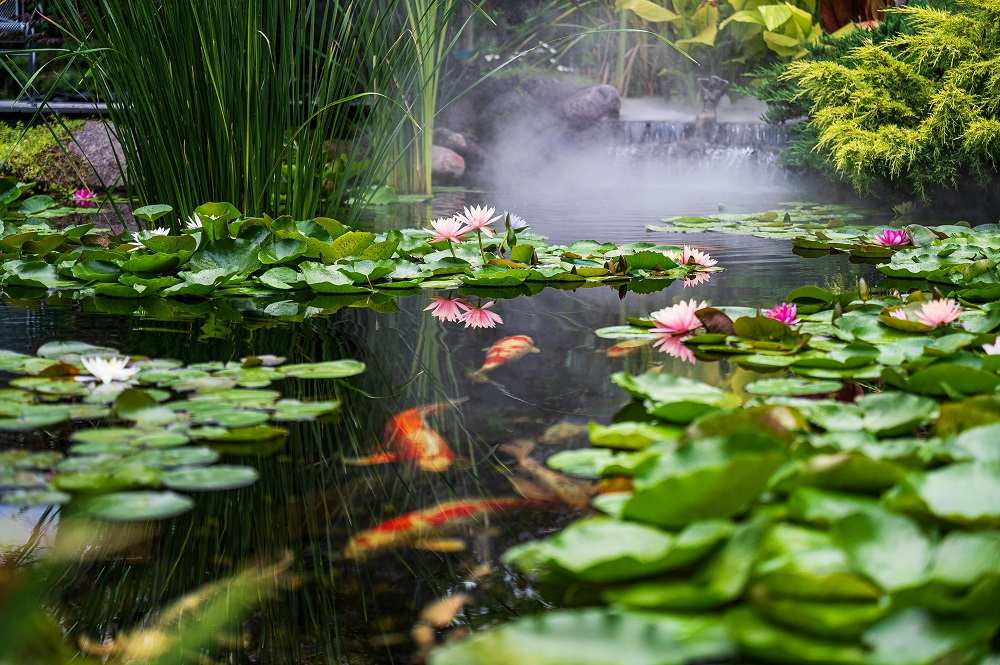
Decorative garden ponds are designed to blend into the landscape using natural stone, aquatic plants, and gentle water movement. These ponds may include lilies, marginal plants, and small water features like bubbling rocks or short streams.
Costs increase based on pond size, depth, liner quality, stonework, and whether lighting or small waterfalls are added. While more involved than pondless systems, decorative ponds remain a mid-range investment for many Richmond homeowners.
Typical cost range:
Most decorative ponds fall into the mid-range, with pricing influenced heavily by customization and landscaping integration.
Best for:
- Homeowners who enjoy gardening
- Natural, organic landscape designs
- Moderate maintenance preferences
Koi Ponds
Koi ponds are the most complex and expensive type of backyard water feature. They require deeper excavation, reinforced construction, and advanced filtration systems to support fish health and water clarity.
Proper koi ponds include bottom drains, skimmers, biological filtration, and sufficient depth to protect fish during Richmond’s seasonal temperature changes. While the upfront cost is higher, a professionally built koi pond can provide decades of enjoyment when properly maintained.
Typical cost range:
Koi ponds represent a higher upfront investment, with long-term care and maintenance considerations factored into the overall cost.
Best for:
- Dedicated hobbyists
- Larger properties
- Homeowners planning long-term pond ownership
Fountains and Bubbling Water Features
Fountains and bubbling features offer the most budget-friendly entry point into backyard water design. These features are often self-contained, compact, and can be installed as focal points within patios, gardens, or courtyards.
Because they require minimal excavation and plumbing, fountains are ideal for homeowners who want visual interest and soothing water sounds without a major construction project.
Typical cost range:
These features are generally lower-cost, with pricing based on materials, pump quality, and decorative finishes.
Best for:
- Smaller outdoor spaces
- First-time water feature installations
- Accent features rather than full landscape transformations
How Property Conditions in Richmond Affect Cost
Soil Composition and Drainage in Central Virginia
Central Virginia soil conditions are often a mix of clay-heavy and compacted earth, especially in established neighborhoods around Richmond. Clay soils retain water and drain slowly, which can be both a benefit and a challenge when installing a water feature.
Poor drainage may require additional excavation, gravel bases, underlayment, or drainage systems to stabilize the structure and prevent shifting over time. In some cases, extra labor is needed to properly shape the basin or install overflow controls, which can raise installation costs.
Sloped vs. Flat Yards and Excavation Needs
Yard slope is one of the most significant cost variables for water feature installations. Sloped properties often require terracing, retaining elements, or stepped excavation to safely support ponds, waterfalls, or streams.
While slopes can enhance the visual impact of waterfalls and moving water, they typically increase labor and material costs. Flat yards, on the other hand, may require deeper excavation to create elevation changes, which also adds time and expense.
Tree Coverage and Leaf Management Considerations
Many Richmond properties feature mature trees that provide shade and character but they also introduce ongoing maintenance challenges for water features.
Heavy leaf drop can clog skimmers, pumps, and filtration systems, especially in fall. To address this, installers may recommend upgraded filtration, leaf nets, strategic placement away from tree canopies, or additional clean-out access points.
Accessibility for Equipment and Materials
Site access is another often-overlooked factor that affects pricing. Narrow side yards, fenced properties, stairs, or limited access points can make it difficult to bring in excavation equipment, stone, and construction materials.
When machinery access is restricted, installers may need to rely on manual labor, smaller equipment, or staged material delivery all of which increase labor hours. In contrast, properties with wide access points or open yards allow for faster, more efficient installation.
Design Factors That Influence Your Final Price
Size, Depth, and Layout of the Feature
The overall size and depth of a water feature are among the most direct cost drivers. Larger features require more excavation, liner material, stone, plumbing, and labor. Depth also matters especially for ponds because deeper designs demand reinforced construction and additional safety considerations.
Layout complexity plays a role as well. A simple circular pond or straight waterfall channel is more cost-efficient than a winding stream, multi-level basin, or custom-shaped design. Homeowners looking to manage costs often focus on optimizing layout efficiency while still achieving a natural appearance.
Natural Stone vs. Manufactured Materials
Material selection significantly affects both price and longevity. Natural stone offers unmatched realism and blends seamlessly with Richmond’s outdoor landscapes, but it comes with higher material and labor costs due to weight, transport, and placement requirements.
Manufactured stone and pre-cast materials provide a more budget-conscious alternative. These materials are lighter, easier to install, and more consistent in shape, which reduces labor time. While they may lack the unique character of natural stone, they still offer durable and attractive results for many projects.
Number of Waterfalls or Streams
Water movement adds visual appeal and sound but each additional waterfall, cascade, or stream section increases complexity. Multiple drops require extra plumbing lines, pumps with higher capacity, and more stonework to support flow and structure.
A single, well-designed waterfall can often deliver the same aesthetic impact as multiple smaller cascades at a lower cost. Homeowners focused on budget efficiency may opt for fewer water elements with stronger visual placement rather than spreading water movement across the entire yard.
Integration with Existing Landscaping
How a water feature connects with existing landscaping also affects pricing. Features designed to blend into current patios, retaining walls, gardens, or hardscapes require careful planning and custom fitting.
If existing elements need to be modified such as rerouting drainage, adjusting grading, or removing plantings additional labor and materials may be required. However, thoughtful integration often increases property value and reduces the need for future landscape changes.
Equipment Costs: Pumps, Filtration, and Plumbing
Proper Pump Sizing for Water Clarity and Longevity
Pump selection is one of the most critical and commonly misunderstood cost factors. A pump must be correctly sized based on water volume, waterfall height, and the number of water features it supports.
Undersized pumps struggle to circulate water effectively, leading to cloudy water, algae buildup, and premature equipment failure. Oversized pumps, while powerful, can waste energy and increase operating costs. Professional sizing ensures consistent flow, quieter operation, and longer pump lifespan.
Filtration Systems Based on Feature Type
Filtration needs vary widely depending on the type of water feature. Pondless waterfalls generally require simpler mechanical filtration to capture debris, while decorative ponds need balanced mechanical and biological filtration to support plants and maintain water quality.
Koi ponds demand the most advanced systems, often combining skimmers, biological filters, and bottom drains to handle fish waste and organic matter. These systems represent a larger portion of the total project cost but are essential for healthy fish and stable water conditions.
Plumbing and Underground Piping Requirements
Plumbing is a hidden but vital component of any water feature. Underground piping connects pumps, filters, waterfalls, and reservoirs, ensuring smooth water circulation throughout the system.
Costs increase with longer pipe runs, multiple water returns, or complex layouts that require trenching around existing landscaping or hardscaping. In Richmond properties with mature yards, careful routing is often necessary to avoid tree roots, utilities, or drainage systems.
Energy-Efficient Equipment vs. Upfront Savings
Homeowners often face a choice between lower upfront costs and long-term efficiency. Energy-efficient pumps and modern filtration systems typically cost more initially but consume less electricity and require fewer replacements over time.
Given Richmond’s long outdoor-use seasons, energy-efficient equipment can significantly reduce monthly operating costs. In contrast, cheaper equipment may save money at installation but lead to higher utility bills and more frequent maintenance.
Labor and Installation Costs Explained
Site Preparation and Excavation
Every water feature begins with careful site preparation. This includes layout marking, protecting surrounding landscaping, and preparing access routes for equipment and materials. Excavation work varies significantly depending on soil conditions, depth requirements, and whether the yard is flat or sloped.
In Richmond, clay-heavy soil and established landscapes often require slower, more controlled excavation. Removing excess soil, shaping basins, and ensuring proper grading for water flow all add labor time, especially for larger ponds or multi-level waterfalls.
Structural Installation and Liner Placement
Once excavation is complete, the structural foundation of the water feature is installed. This includes underlayment placement, flexible or reinforced liners, and structural supports where needed.
Proper liner installation is critical. It must be carefully shaped to avoid folds, stress points, or weak seams that could cause leaks later. Achieving this level of precision requires experienced installers and adds to labor costs but it greatly reduces the risk of future failures and repairs.
Rock Setting and Aesthetic Detailing
Rock placement is one of the most labor-intensive and skilled parts of the process. Natural stone must be selected, positioned, and secured to create a stable structure that looks organic rather than staged.
Each rock is set with attention to weight distribution, water flow, and visual balance. Waterfalls, stream edges, and pond borders all require hands-on craftsmanship to ensure the feature looks natural from every angle. The more detailed and customized the design, the more labor time is involved.
Electrical and Water Line Connections
Final installation includes connecting pumps, lighting, filtration systems, and any automated features. Electrical work must meet safety standards and is often handled by licensed professionals, particularly when dedicated circuits or outdoor-rated connections are required.
Water lines, auto-fill systems, and overflow controls are also installed at this stage. These connections are typically hidden but must be properly routed and tested to ensure reliable operation. Skilled labor at this phase ensures the system runs efficiently and safely from day one.
Ongoing Maintenance Costs to Plan For
Seasonal Cleanouts and Inspections
Seasonal maintenance is one of the most consistent ongoing costs. In Richmond, spring and fall are especially important due to pollen, leaf drop, and changing temperatures.
Spring cleanouts typically involve removing debris, rinsing filters, checking pumps, and restarting systems after winter. Fall maintenance focuses on leaf removal, system inspections, and preparing the feature for colder months. Skipping these cleanouts often leads to clogged filtration, poor water clarity, and equipment strain.
Water Treatments and Beneficial Bacteria
Water treatments are a regular, smaller but ongoing expense. Beneficial bacteria help break down organic waste, reduce sludge buildup, and support stable water conditions especially in ponds with fish or heavy plant life.
Additional treatments may include dechlorinators for water top-offs, algae control products, or mineral supplements depending on the feature type. While these products are not expensive individually, they add up over the course of a season and should be factored into annual ownership costs.
Electricity and Water Usage
Water features operate continuously during the warmer months, so electricity usage is an ongoing consideration. Pumps, filtration systems, and lighting all contribute to utility costs.
Energy-efficient equipment helps keep monthly electricity costs manageable, but even efficient systems represent a modest, steady expense. Water usage is generally limited to evaporation replacement and occasional cleaning, but it can increase during hot Richmond summers.
Professional Maintenance Plans vs. DIY Care
Homeowners typically choose between professional maintenance plans and do-it-yourself care or a combination of both. Professional plans offer scheduled cleanouts, inspections, and adjustments, providing peace of mind and reducing the risk of costly repairs.
DIY maintenance lowers direct costs but requires time, learning, and consistency. Mistakes such as over-cleaning filters, improper water treatment use, or neglected inspections can lead to higher repair expenses later.
How to Budget Smart for a Water Feature Project
Setting Priorities between Size, Style, and Features
Budget planning begins with deciding what matters most. Some homeowners prioritize a larger footprint, while others focus on premium materials or dramatic water movement. Trying to maximize every element at once often leads to overspending.
A clear hierarchy such as choosing a smaller feature with high-quality stone, or a larger feature with simpler detailing helps keep costs controlled. By defining which aspects are essential and which are optional, you can make informed trade-offs without compromising the overall experience.
Planning for Phased Upgrades
One of the most effective ways to manage costs is to plan for phased improvements. A water feature can be designed with future upgrades in mind, such as adding extra waterfalls, lighting, or plantings later.
This approach allows homeowners to enjoy a finished, functional feature now while spreading additional investments over time. Proper planning during the initial build such as installing larger plumbing or electrical capacity can make future upgrades far more affordable.
Allowing a Contingency Budget
Even with careful planning, unexpected costs can arise. Soil conditions, drainage adjustments, or access challenges sometimes only become fully apparent during excavation.
Setting aside a contingency budget helps absorb these surprises without forcing last-minute design compromises. A buffer also provides peace of mind, allowing decisions to remain focused on quality rather than urgency.
Aligning Design Goals with Realistic Expectations
Finally, smart budgeting requires aligning your design goals with what is realistically achievable within your budget. Inspiration photos and online galleries often showcase high-end installations that include extensive stonework, custom features, and advanced equipment.
A professional consultation helps translate those ideas into a practical design that fits your property and financial comfort level. Clear expectations early in the process prevent frustration and ensure the final result meets both aesthetic and functional goals.
Questions to Ask Contractors about Pricing
What’s Included in the Quoted Price?
Start by asking for a detailed breakdown of what the quoted price covers. A clear proposal should specify excavation, materials, equipment, labor, electrical work, and any finishing details.
Some quotes appear lower because they exclude critical components such as upgraded filtration, proper liner underlayment, or electrical connections. Understanding what is included and what is not allows for accurate comparisons between contractors and prevents unexpected add-ons later in the project.
Are Maintenance and Equipment Warranties Explained?
Water features rely on mechanical systems, so warranties matter. Ask whether pumps, filters, liners, and lighting are covered by manufacturer warranties and how long those warranties last.
It’s also important to clarify whether workmanship is guaranteed and what support is available if equipment fails or performance issues arise. Contractors who explain warranties upfront demonstrate confidence in both their products and their installation quality.
How Are Unexpected Site Issues Handled?
Even well-planned projects can encounter surprises, such as buried debris, poor drainage, or difficult soil conditions. Ask how these issues are handled if they arise during construction.
A professional contractor should explain their process for identifying problems, communicating changes, and adjusting costs transparently. Clear policies around change orders help homeowners stay informed and in control throughout the project.
Will the System Be Sized for Long-Term Performance?
One of the most important questions is whether the system is being designed for long-term reliability. Proper sizing of pumps, filtration, and plumbing ensures consistent water clarity and reduces wear on equipment.
Ask how the contractor determines equipment size and whether seasonal conditions, usage patterns, and future upgrades are considered. A well-sized system may cost more initially but typically saves money over time through lower maintenance and fewer repairs.