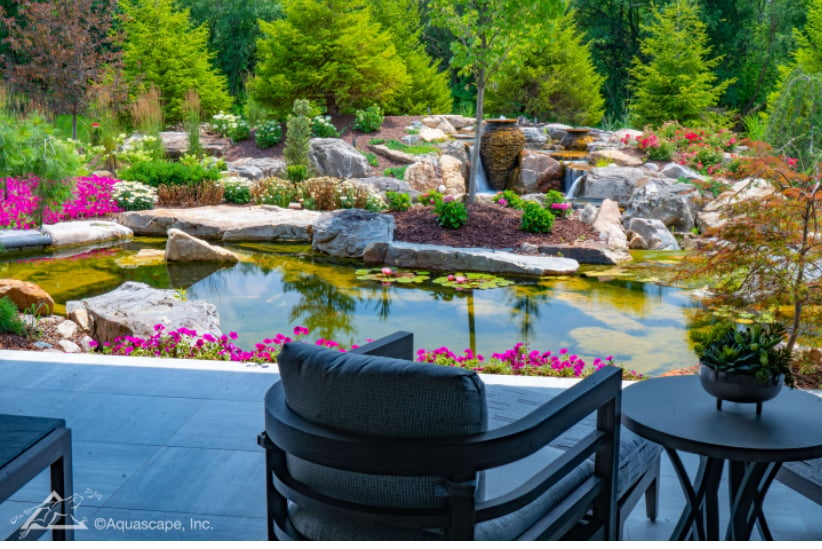
A pond losing water does not always mean a major problem. Before you start pulling up rocks or assuming the worst, there are a few simple things to check — and more often than not, the cause is something straightforward. A good rule of thumb: losing between half an inch and three-quarters of an inch per day is completely normal. Anything beyond that is worth a closer look.
What “Normal” Water Loss Looks Like
Ponds lose water every day. Evaporation from sun exposure, wind, and waterfall splash is a natural part of any outdoor water feature. During hot Richmond summers, normal evaporation can account for up to three-quarters of an inch per day depending on your pond size, waterfall flow, and how much direct sun the water surface gets.
If you are consistently losing more than that — or noticing a sudden drop overnight — that is the signal to dig a little deeper.
Common Reasons Your Pond Is Losing Water
Not every water loss situation is a leak. Here are the most likely culprits, starting with the simplest:
Low Edges Along the Liner
Over time, the soil beneath a liner edge can settle and shift. When that happens, water quietly escapes over the low spot and soaks into the surrounding ground — no dramatic leak, no visible tear, just a slow and steady loss that is easy to miss.
Debris in the Stream or Around the Skimmer
Leaves and organic buildup around the skimmer basket or along the stream channel can redirect water flow. Sometimes it only takes a clogged passage to push water off the edge of the liner and out of the system entirely.
Plumbing Fittings and Connections
Small drips at plumbing joints, around the biofalls, or at pump connections add up fast. These are often hidden behind rockwork and easy to overlook during a casual inspection.
Settled Rocks and Liner Folds
Rocks shift. Liner folds. Both create low points where water can escape. This is especially common in older ponds or after a heavy rain event when the ground moves and settles.
A True Liner Leak
Actual tears in the liner do happen — usually from tree roots, sharp debris, or years of wear. But in most cases, a true liner tear is not the first explanation. It is usually the last thing ruled out after everything else has been checked.
The One-Hour Leak Inspection
Rather than spending hours guessing, I offer a thorough one-hour leak inspection to track down exactly where your water is going.
As a certified Aquascape contractor with years of hands-on experience, I work through all the usual problem areas in a systematic order:
- Beneath and behind rocks, where the liner can settle or fold
- Plumbing fittings and connections, checking for drips or loose seals
- Low edges in the liner, where water quietly escapes unnoticed
- Hardware including the skimmer, biofalls, and pump connections
Small fixes get handled right then and there. That includes packing soil beneath a settled liner edge, clearing debris from the stream, or emptying the skimmer basket. If the pond needs more extensive work, I will walk you through exactly what I found and provide a clear, separate estimate — no surprises.
Evaporation or a Real Leak? Here Is a Quick Test
If you want to get a read on the situation before calling anyone, try this:
Turn off the waterfall and pump for 24 hours and mark the water level with a piece of tape. Check back the next day.
- If the water level holds steady, the loss is happening somewhere in the waterfall, stream, or upper edges — not the pond basin itself.
- If the level keeps dropping with the system off, the leak is in the pond basin or plumbing.
This simple test narrows things down fast and helps make the inspection more targeted.
Protecting What You Have Built
Your fish, your plants, and the investment you made in your outdoor space are worth protecting. A pond that is slowly losing water is also stressing your pump — running low water levels can burn out equipment fast and turn a minor fix into a much bigger repair.
The good news is that most water loss issues are straightforward to diagnose and quick to resolve once someone knows where to look.
If your pond is dropping faster than it should, reach out and we can get eyes on it quickly.
Frequently Asked Questions
How much water loss is normal for a pond?
Losing between half an inch and three-quarters of an inch per day is considered normal, especially during warm weather with active waterfalls. Anything over an inch per day consistently is worth having checked.
How long does a leak inspection take?
The inspection itself takes about one hour. Small issues that are found during the inspection are handled on the spot. If anything more involved is needed, you will receive a separate written estimate before any additional work begins.
Can I just top off the water instead of fixing the leak?
Topping off with city water regularly introduces chlorine and chloramines into your pond, which disrupts the biological balance and can stress fish over time. It is also masking a problem that tends to get worse, not better. Getting it diagnosed early almost always saves money.
What if the leak is in the liner?
If the inspection points to a liner tear, the damaged section gets cleaned and patched with Aquascape-approved materials that bond directly to EPDM liner. In cases with extensive damage, a liner section replacement may be the better long-term fix. Either way, you will know exactly what is needed and what it will cost before work begins.
Do you service ponds outside Richmond?
Yes. We serve the greater Richmond metro area including surrounding counties. Reach out through the contact page and we can confirm your location.