
Fountainscape · Midlothian, VA
Stacked slate urn fountain
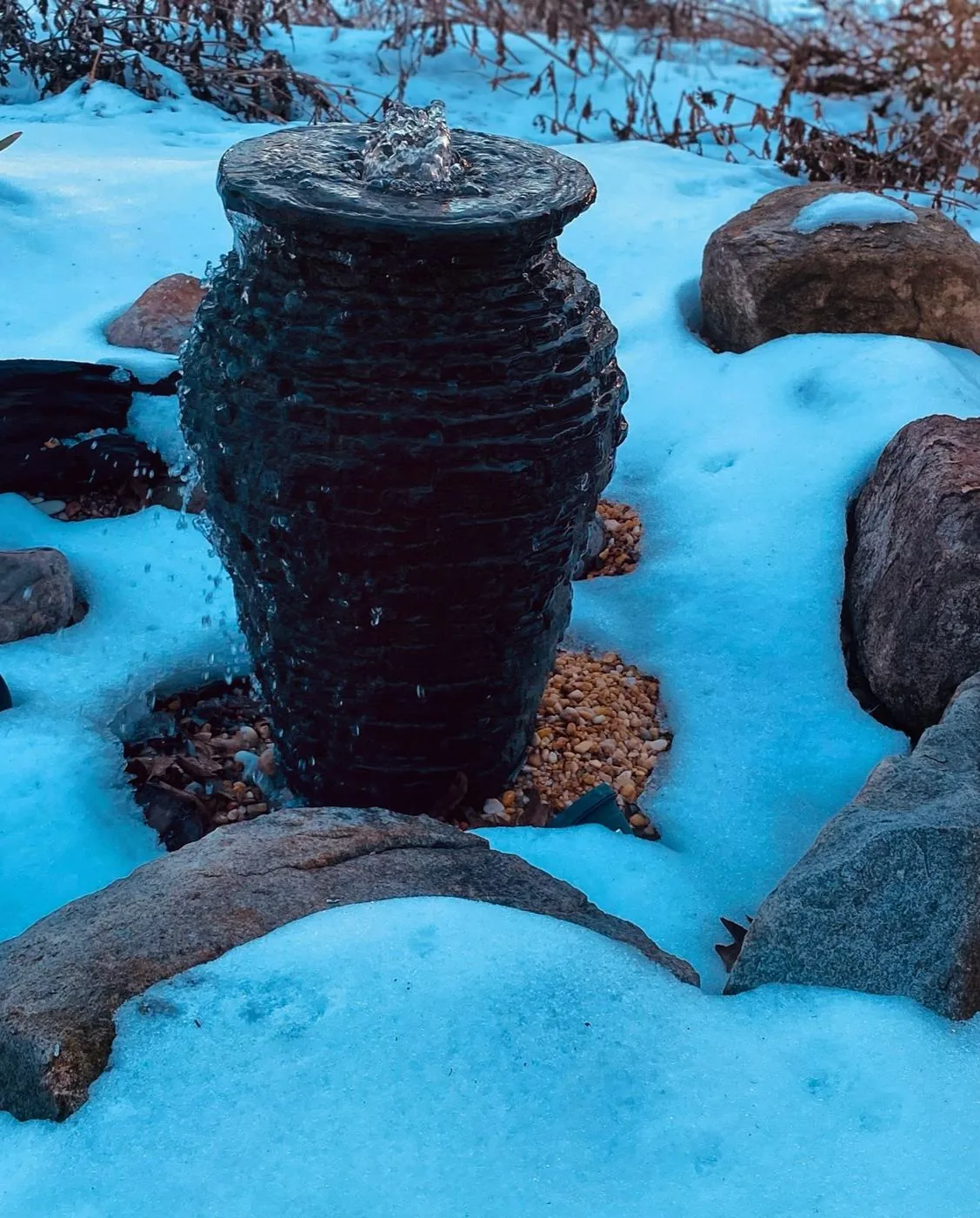
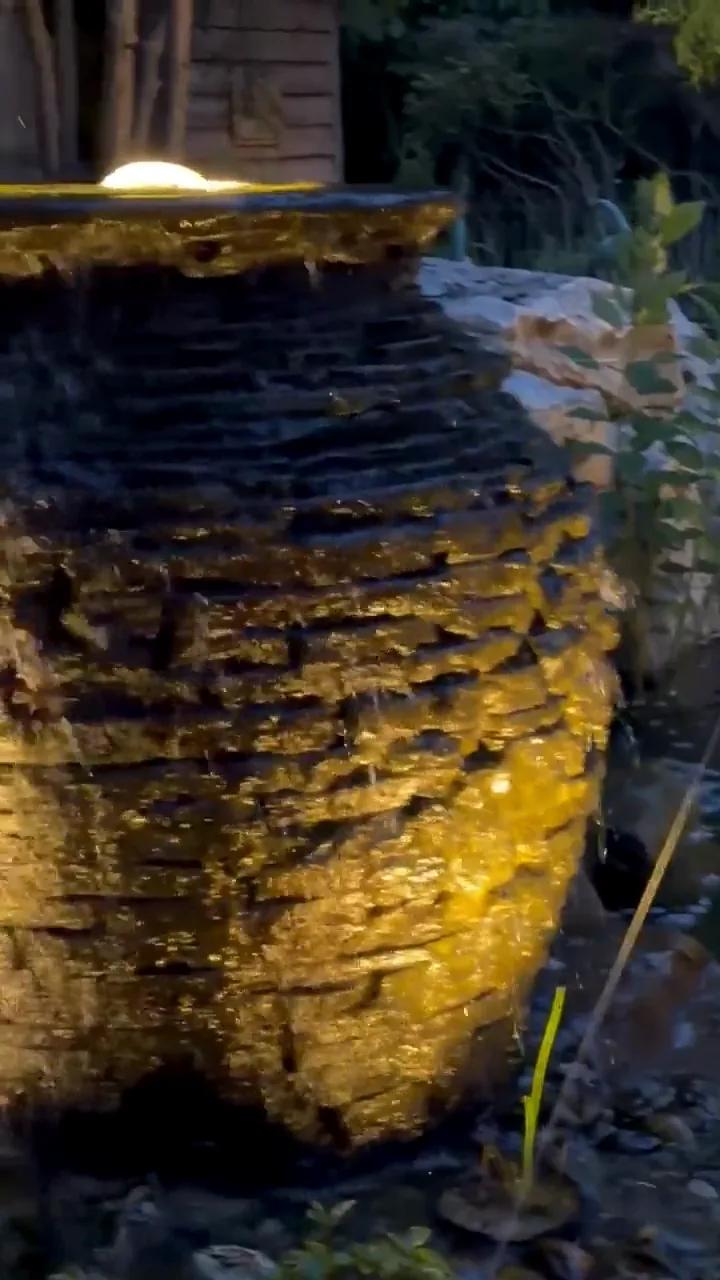
A stacked slate urn bubbling over onto gravel, with the basin and pump hidden underneath. Running in deep snow in January, and lit at dusk in Midlothian.
The project
The story
A stacked slate urn is a fountain with no pond. Water rises through the urn, boils over the top, runs down the ridged sides and disappears into a bed of gravel. Under the gravel is a basin with the pump in it. There is no open water, so a toddler can lean on the edge and the dog can drink from it, and it fits in the corner of a bed where a pond never would.
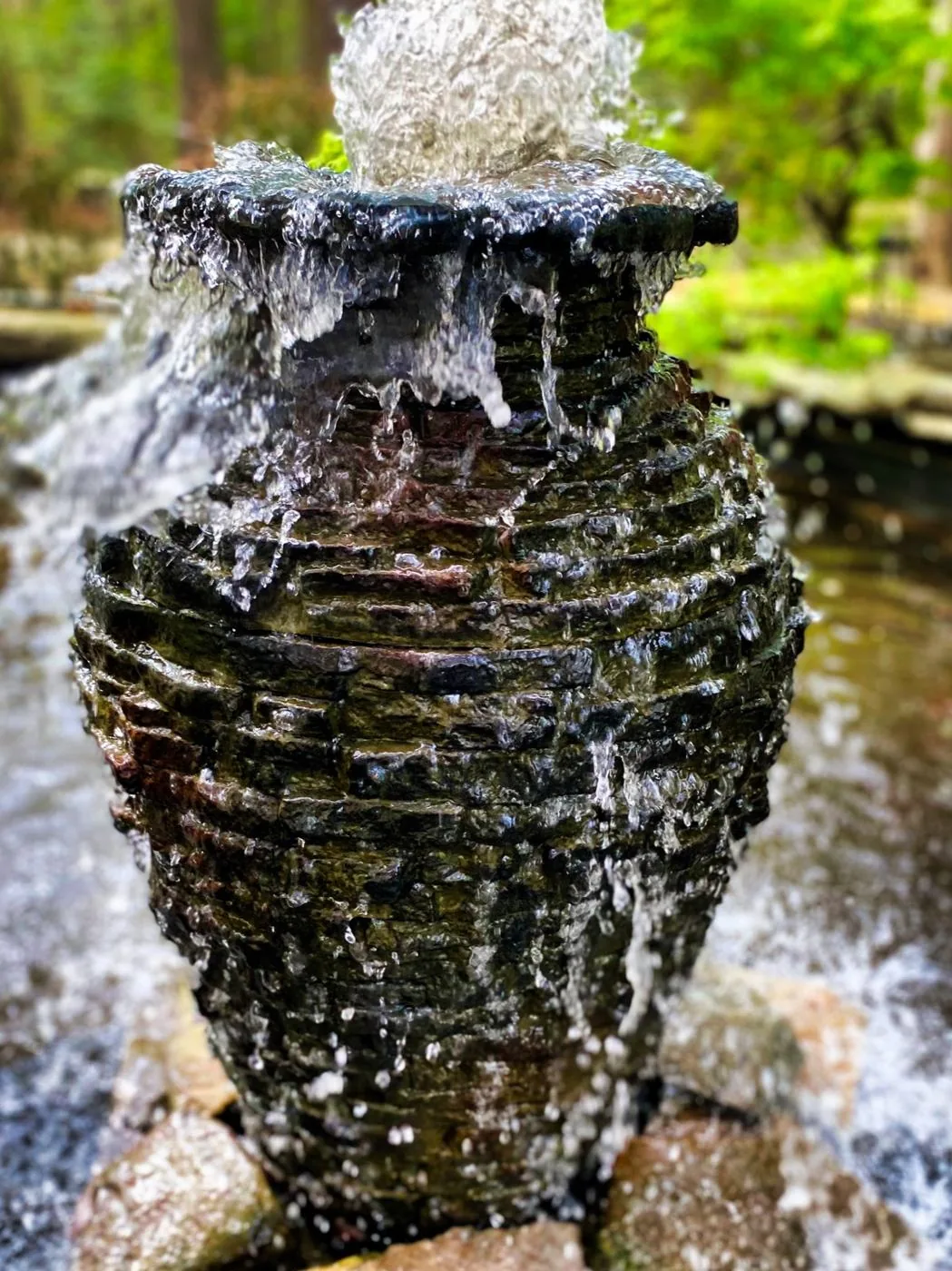
The three pictures here show an urn in three situations, and they may well be three different installs. The first is a tall urn with a wide collar in full flow, water pouring off the rim in a sheet with a stream running behind it. The second is a shorter urn in deep snow, the gravel at its base melted clear. The third is an urn at dusk in Midlothian, lit from inside the top so the wet slate glows.
Jordan keeps all three in his photos because each one shows something a sunny afternoon shot cannot. An urn runs in January, and it is still there at nine o'clock at night.
In pictures
The finished work
How it went in
The build
An urn is built from the ground down. Jordan digs the basin first, sets a reservoir and pump vault in it, and runs the plumbing up through the middle. The urn sits over the vault on a support, and the gravel and boulders go in around it until nothing but the urn and the stone shows. Fill it, switch it on, and the water finds its own way down the slate.
The gravel bed matters more than it looks. It is what the water lands on, so it sets the sound. Coarse gravel gives a lighter, splashier note than flat stone. The snow photo shows the bed clearly: a ring of clean pebbles at the base where the water keeps the snow from settling.
Lighting goes in at the same time as the plumbing. A light set in the top of the urn, as in the dusk clip, picks up every ridge of the slate as the water runs over it. If you are wondering whether lighting is worth it, the clip is the answer.
Why it looks like this
The choices
Stacked slate rather than a smooth bowl. The ridges break the water into hundreds of small runs, which is where the sound comes from and what the light catches after dark. A smooth urn is quieter and plainer.
The height and the collar set the sound. The tall urn with the wide collar throws a sheet of water off its rim. The shorter urn in the snow bubbles rather than pours. Both are the same idea at a different volume, and the choice depends on where you will be sitting when you hear it.
Boulders around the base, so the urn reads as part of the garden rather than an ornament set on the lawn. In the snow picture the boulders carry the drift and the urn stands in a pocket of its own weather.
Estimate calculator
See what a fountainscape like this would cost
A few quick questions, one at a time, and a price range on the spot. Then pick a time for a free phone consultation with Jordan.